
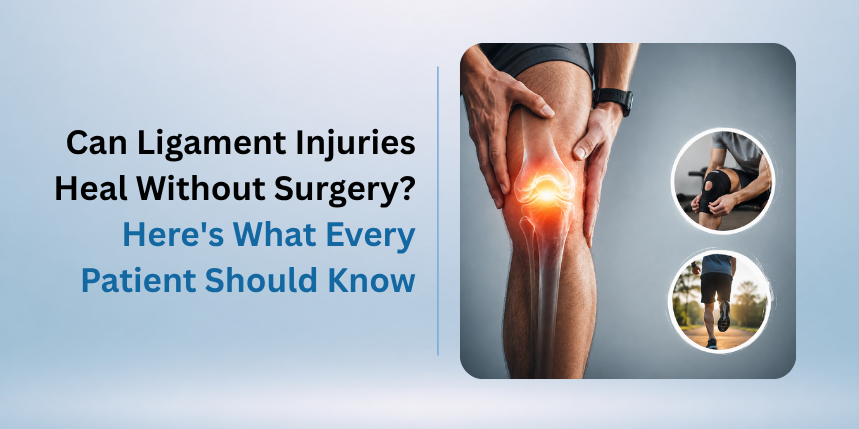
Can Ligament Injuries Heal Without Surgery? Here's What Every Patient Should Know
Can a Ligament Injury Heal on Its Own?
A ligament injury can happen suddenly while playing sports, exercising, or even during a simple twist or fall. Many patients wonder whether surgery is always necessary or if the ligament can heal naturally. The answer depends on the type of ligament injured, the severity of the tear, your activity level, and your long-term goals.
While some mild ligament injuries can recover with conservative treatment, complete tears especially involving the ACL often require specialized care. Consulting an orthopedic expert early helps determine the most appropriate treatment plan and prevents long-term complications.
What Are Ligaments?
Ligaments are strong bands of connective tissue that connect one bone to another. They provide stability to your joints and help control movement.
The knee contains four major ligaments:
-
Anterior Cruciate Ligament (ACL)
-
Posterior Cruciate Ligament (PCL)
-
Medial Collateral Ligament (MCL)
-
Lateral Collateral Ligament (LCL)
An injury to any of these ligaments can affect your ability to walk, run, climb stairs, or participate in sports.
Common Causes of Ligament Injuries
Ligament injuries usually occur due to sudden force or abnormal twisting of the knee.
Some common causes include:
-
Sports injuries
-
Road traffic accidents
-
Falls
-
Sudden changes in direction while running
-
Landing awkwardly after jumping
-
Direct impact to the knee
Athletes are at higher risk, but ligament injuries can happen to anyone regardless of age.
Can Every Ligament Injury Heal Without Surgery?
The answer is no.
Minor ligament sprains or partial tears often heal successfully with:
-
Rest
-
Ice therapy
-
Compression
-
Elevation (RICE)
-
Physiotherapy
-
Knee braces
-
Muscle strengthening exercises
However, complete ligament tears particularly ACL injuries generally do not heal naturally because the torn ends cannot reconnect effectively.
Patients with severe instability may eventually require ACL and ligament surgery in haryana to restore normal knee function.
Signs You Should See an Orthopedic Specialist
Ignoring a ligament injury can increase the risk of further joint damage.
Consult an orthopedic specialist if you experience:
-
A popping sound during injury
-
Immediate swelling
-
Knee instability
-
Difficulty walking
-
Repeated episodes of the knee "giving way"
-
Persistent pain despite rest
Early diagnosis often leads to better treatment outcomes.
How Are Ligament Injuries Diagnosed?
Your orthopedic surgeon will evaluate the injury using:
-
Detailed medical history
-
Physical examination
-
Stability tests
-
X-rays (to rule out fractures)
-
MRI scan (to assess ligament damage)
Accurate diagnosis helps determine whether conservative treatment or surgery is the most appropriate option.
When Is Surgery Recommended?
Surgery may be advised if:
-
The ligament is completely torn.
-
The knee feels unstable during daily activities.
-
You participate in sports involving running or pivoting.
-
Multiple ligaments are injured.
-
Conservative treatment has failed.
-
There is associated cartilage or meniscus damage.
Modern ACL and ligament surgery in haryana focuses on restoring knee stability while helping patients safely return to work, sports, and everyday activities.
Recovery After Ligament Surgery
Recovery is a gradual process and depends on the type of surgery and individual healing.
Rehabilitation generally includes:
-
Pain management
-
Swelling control
-
Physiotherapy
-
Strength training
-
Balance exercises
-
Gradual return to activity
Most patients begin walking with assistance within a short period after surgery, while full recovery may take several months depending on the procedure and rehabilitation program.
Following your physiotherapist's advice is essential for achieving the best possible outcome.
Can You Prevent Ligament Injuries?
Although not every injury can be prevented, the risk can be reduced by:
-
Strengthening the muscles around the knee
-
Warming up before exercise
-
Wearing appropriate footwear
-
Improving balance and flexibility
-
Learning proper sports techniques
-
Avoiding sudden increases in training intensity
These preventive measures help protect the knee joint during daily activities and sports.
About Dr. Manuj Wadhwa
Dr. Manuj Wadhwa is an experienced orthopedic and joint replacement surgeon who also manages a wide range of sports injuries and ligament disorders. He believes that every ligament injury should be carefully evaluated before deciding on surgery. While many patients recover successfully with physiotherapy and rehabilitation, others may benefit from surgical reconstruction depending on the severity of the injury and their lifestyle requirements.
Dr. Wadhwa provides personalized treatment plans, guiding patients from diagnosis through recovery with a focus on restoring stability, mobility, and confidence.
Why Early Treatment Is Important
Many patients delay treatment because they assume the pain will improve with rest. However, untreated ligament injuries can lead to:
-
Chronic knee instability
-
Meniscus tears
-
Cartilage damage
-
Early osteoarthritis
-
Reduced physical activity
If you're searching for the best orthopedic doctor in haryana, an orthopedic specialist near haryana, or knee pain treatment in haryana, timely consultation can make a significant difference in preserving long-term knee health.
Conclusion
Not every ligament injury requires surgery, but not every injury can heal naturally either. The right treatment depends on an accurate diagnosis, the severity of the tear, and your personal activity goals.
At Elite Ortho India, Dr. Manuj Wadhwa and his team provide comprehensive evaluation, advanced orthopedic care, and personalized rehabilitation for patients with ligament injuries and other knee conditions. If you've experienced a knee injury or ongoing instability, schedule a consultation to receive the right treatment at the right time.